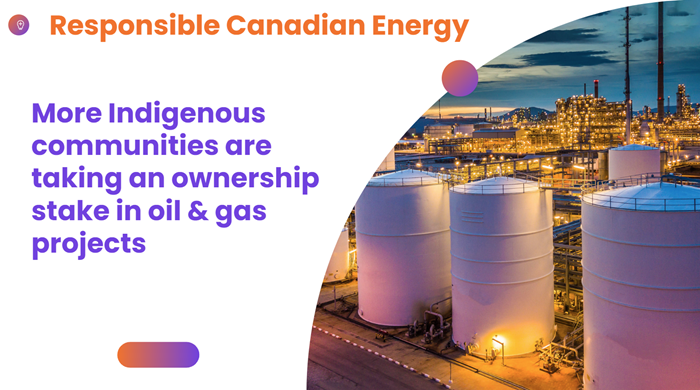
A growing number of Canada’s Indigenous communities are becoming owners of oil and gas projects that can allow them to help reduce environmental impacts and earn a greater share of prosperity.
“I see so much conversation about the importance of Indigenous people sitting at the table of major projects and discussions. The conversation is with the major stakeholders, and that’s Indigenous people,”?said?Jordan Jolicoeur, president of Métis-owned Carvel Electric,?during?the?launch of a?2021 report?about Indigenous engagement in oil and?gas.
Indigenous communities?involved in the resource sector?have gained?significantly more influence and benefits?over the past 20?years,?according to?the Macdonald-Laurier Institute (MLI).
“The trend in recent years has evolved towards nations asserting themselves as partners, owners and shareholders in resource development,”?MLI fellow Heather Exner-Pirot?wrote in a May 2021 report.
“This is often the most consequential way through which they can achieve economic self-determination and real leverage in how projects proceed, including having a more direct say in the environmental provisions of projects.”
Here are some current examples of Indigenous ownership in oil and?gas:
Coastal GasLink Pipeline
Sixteen Indigenous communities in B.C. will jointly own a 10% stake of the Coastal GasLink Pipeline once it is running in 2023. Coastal GasLink will deliver natural gas from northeast B.C. to the LNG Canada export terminal on the coast at Kitimat.
Global LNG demand is expected to nearly double to over 700 million tonnes in 2040 compared to 380 million tonnes in 2021. Canada is expected to help reduce global reliance on coal with LNG that will have the lowest emissions per tonne in the?world.
“This deal is important because it demonstrates the value First Nations can bring as true partners in major projects,” said Chief Corrina Leween of the Cheslatta Carrier Nation, one of the communities that will become a part owner in Coastal GasLink.
Cedar LNG?
The Haisla Nation on B.C.’s north coast is approximately 50% owner of?Cedar LNG,?a proposed $2.4 billion floating natural gas export terminal that if built will be the largest First Nations-owned infrastructure project in Canada.
“It will bring tremendous economic opportunities and benefits, ensuring the Haisla people have control of our own future,”?said?Haisla Chief?Councillor?Crystal?Smith.
Ksi?Lisims?LNG?
Ksi?Lisims?LNG?is a?$10-billion?proposed?new?Canadian natural gas export project?near the Alaska border on the B.C. north coast?owned?jointly?by the Nisga’a Nation, Rockies LNG and Western LNG. Startup is planned in late 2027 or?2028.
LNG Newfoundland and Labrador?
The B.C.-based First Nations Major Projects Coalition and Miawpukek First Nation on Canada’s East Coast are working together on the first-ever Indigenous equity participation in an Atlantic energy project, called?LNG Newfoundland and Labrador.
“Our inclusion in this project is historical, transformational, and an example of how the offshore energy industry, Canada, and Newfoundland and Labrador are truly embracing and giving effect to reconciliation,”?said?Miawpukek?First Nation Chief?Misel?Joe.
East Tank?Farm?
In northern Alberta,?the Fort McKay and?Mikisew?Cree?First Nations own?49% of the Fort Hills oil sands project’s East?Tank Farm.?Completed in 2017, the $545-million deal is one?of the largest business investments to date by a First Nations entity in Canada.
The economic benefits of ownership include funding social programs, education and training, developing business capacity and building infrastructure,?Mikisew?Cree First Nation?says.
Cascade Power Project?
The Indigenous Communities Syndicate?is investing $93 million for an equity stake in the?Cascade Power Project, a new natural gas-fired power plant with capacity to supply 8% of Alberta’s electricity?requirements.
Cascade is expected to start operating in 2023.?Securing the deal is “transformational” for the First Nations communities, said Alexis Nakota Sioux Chief Tony Alexis.
Polaris?Carbon Capture and Storage?
Reconciliation Energy Transition, an affiliate of?Indigenous-owned?Project Reconciliation, has entered into an agreement with Shell to?add “material ownership for First Nations”?in?the company’s proposed Polaris carbon capture and storage (CCS) project.
Reconciliation Energy Transition says its investment in Polaris “will support environmental stewardship and create pension-like intergenerational wealth—thereby supporting the path towards healing, respect and self-determination for participating Nations.”
By Deborah Jaremko